The Zorki goes to Iceland

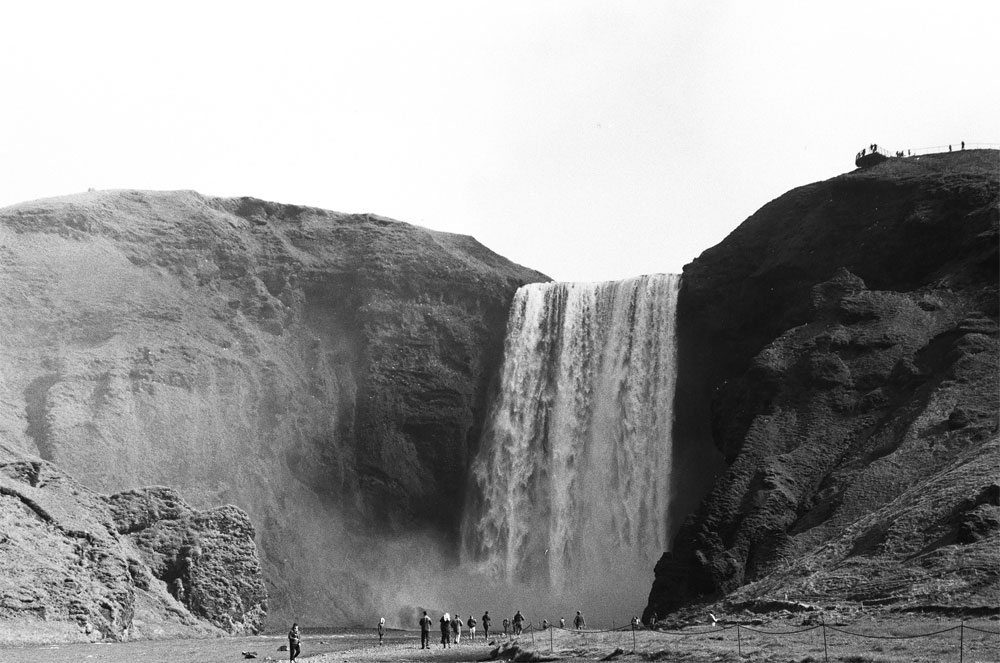
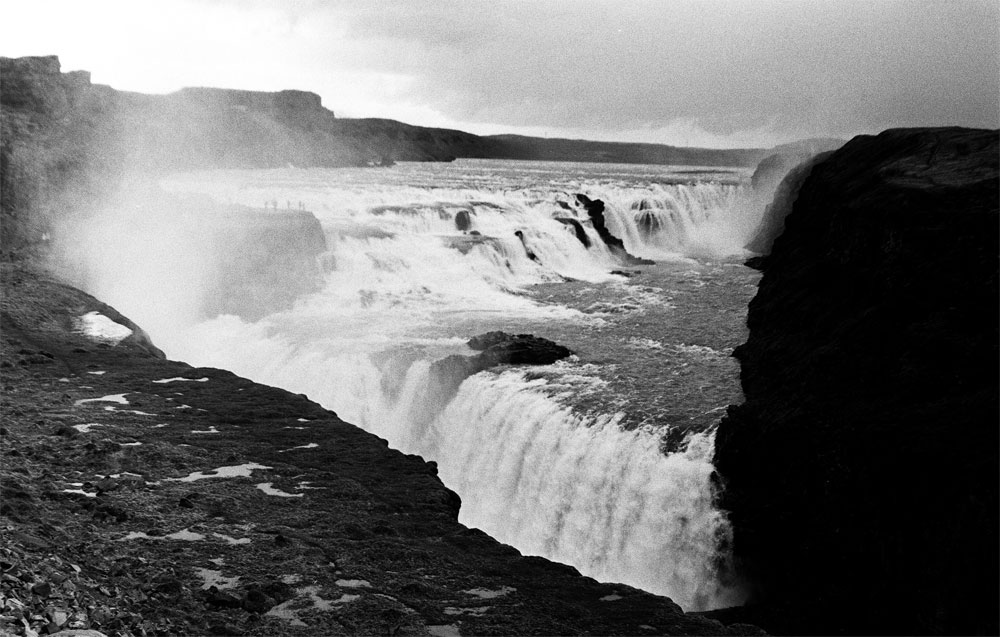
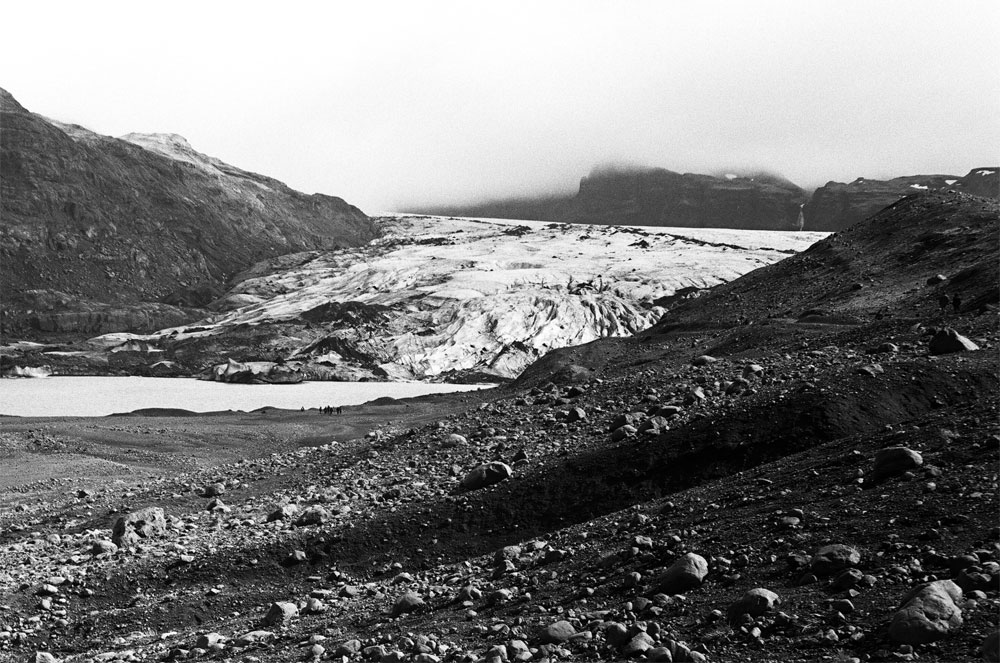
My wife and I had planned a trip to Iceland, hiring a car and going around the Ring Road taking in the sights as we went. I thought that this would be a great opportunity to test the Zorki out some more so I packed it and a few cans of Delta 100 as well as a compact digital camera.

We had a great holiday touring around although the weather could have been a bit better at times and at first all went well with the Zorki. Then, as I was winding on the winding knob got quite stiff and on trying to turn it a bit more I felt it suddenly turn far too easily. My immediate conclusion was that I had pulled the film right out of the cassette and that until I could get to a darkroom or a changing bag the camera was out of action, so I put the Zorki to one side and carried on with my holiday digitally.

Once back in the UK I put the Zorki into a changing bag and opened it up to try and sort out what had happened. In fact I had used the whole roll of film (I hadn’t been paying attention to the frame counter – stupid) and when I tried to wind on some more I had snapped the film with just a short stub protruding from the cassette and the rest of the exposed film on the take up spool.

I carefully unrolled the exposed film from the take up spool and wrapped it in aluminium foil and put it in a cassette tub and wrapped that in foil too. After contacting the people at the processors I sent it off to them with a note explaining what was in the cassette tub.

A couple of days later the film and the scans were returned and although some of the frames at the end of the film (i.e. near where it snapped) were scratched as a result of my handling, much of the film was OK.

Here are a few example photographs:
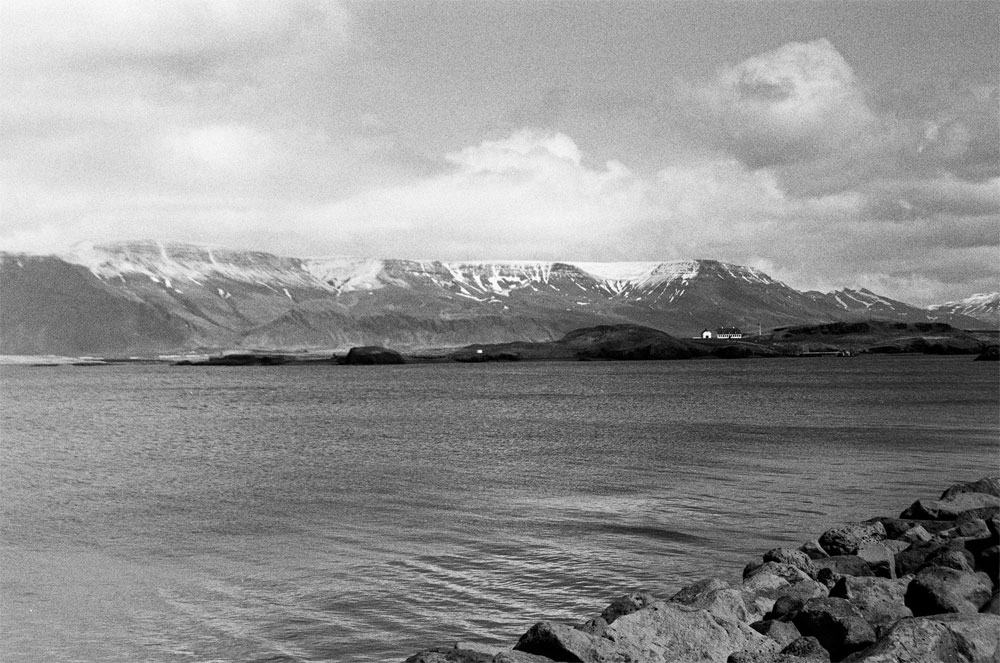
I think I still need to get to grips with the exposure on some of these but overall I’m fairly satisfied. I also took a couple of pictures of the Harpa Concert Hall in Reykjavic shown below.
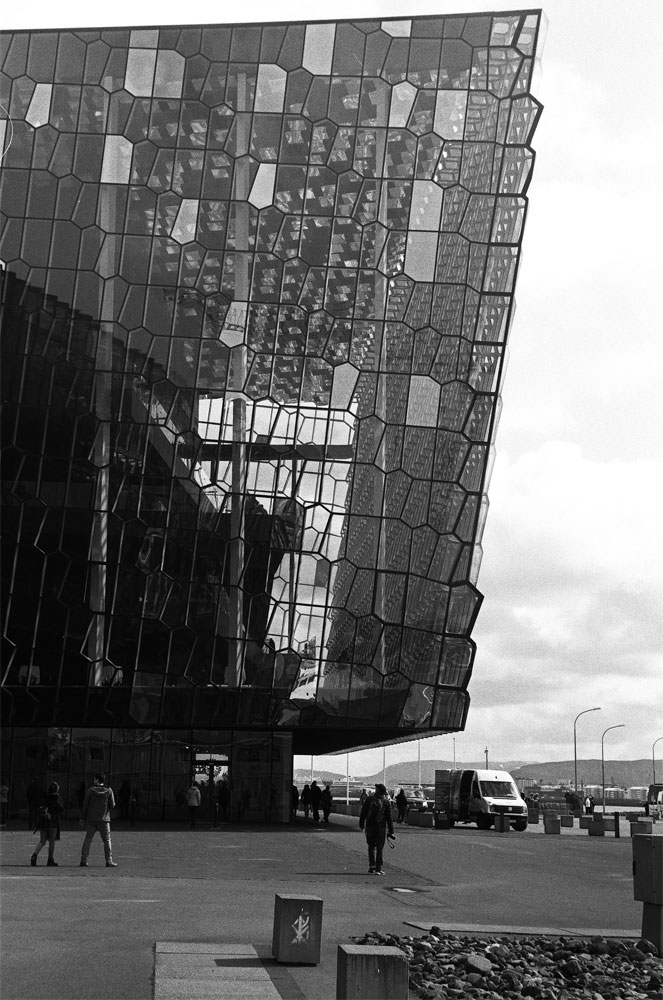
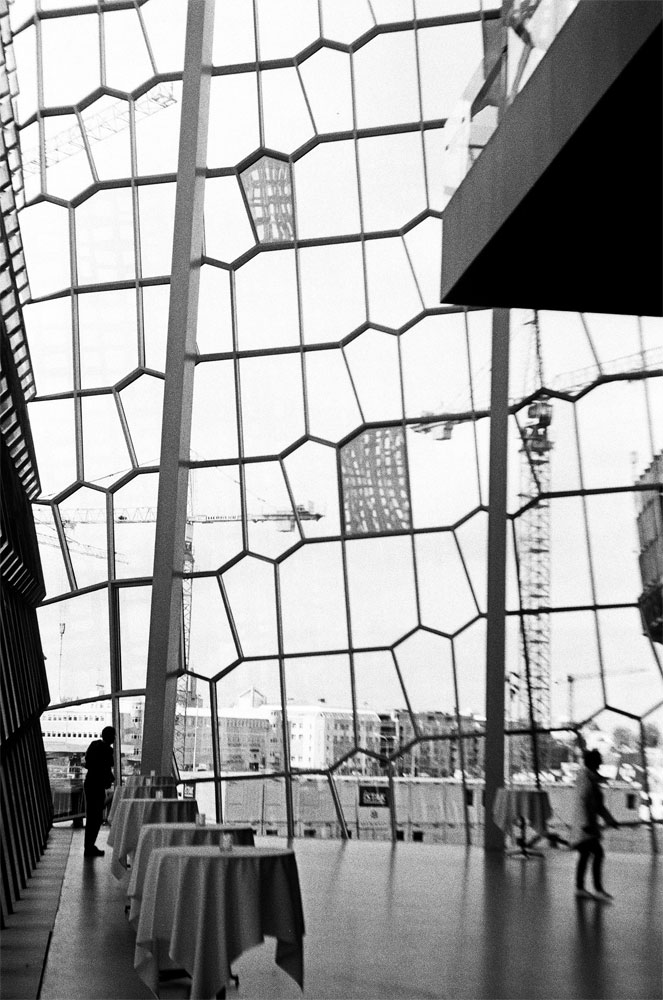
I think these two photographs show what the camera and lens are capable of in the right conditions although again all of the photographs are more contrasty and more grainy than I had expected. Perhaps I really need to get down and do my own developing and sort out the film/developer combination that I like the best.

Now it’s confession time. Below is my favorite photo taken in Iceland of the little church in Þingvellir National Park but I didn’t take it with the Zorki, nor did I take it with the digital compact. I took it using a Samsung J3 phone then converted it to black and white and then cropped it. I had a slightly different crop printed up to 56cm x 20cm which is now hanging on a wall at home and I think it looks good. It doesn’t have the sharpness and detail a better camera would have given it but for a moody photograph I think it’s just fine.

There is a saying that’s often attributed to Chase Jarvis, although I’m sure I heard it or something like it thirty or more years ago, that says: “The best camera is the one you have with you”.
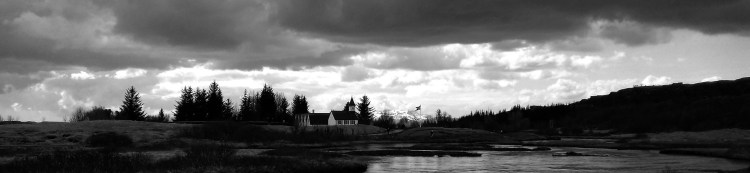
I interpret this saying as meaning it’s often better to have a photograph taken on any camera than to have no photograph at all.
First film through the Zorki

After changing my mind so many times I eventually bought some Ilford Delta 100 film to try out the Zorki. I’m still not sure why I chose this film but I had long since lost any preference for one film over another that I think I must have decided to try something new – at least new to me. Reading various blogs and forums really just suggested that film choice was personal and the only way to see if you liked the results a film gave was to buy it and try it.

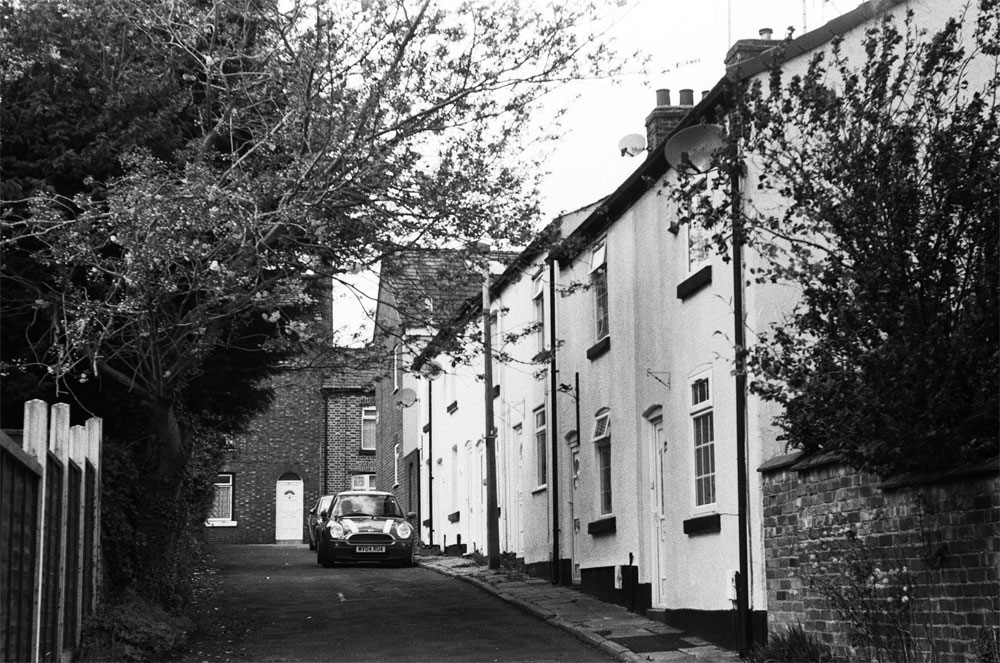
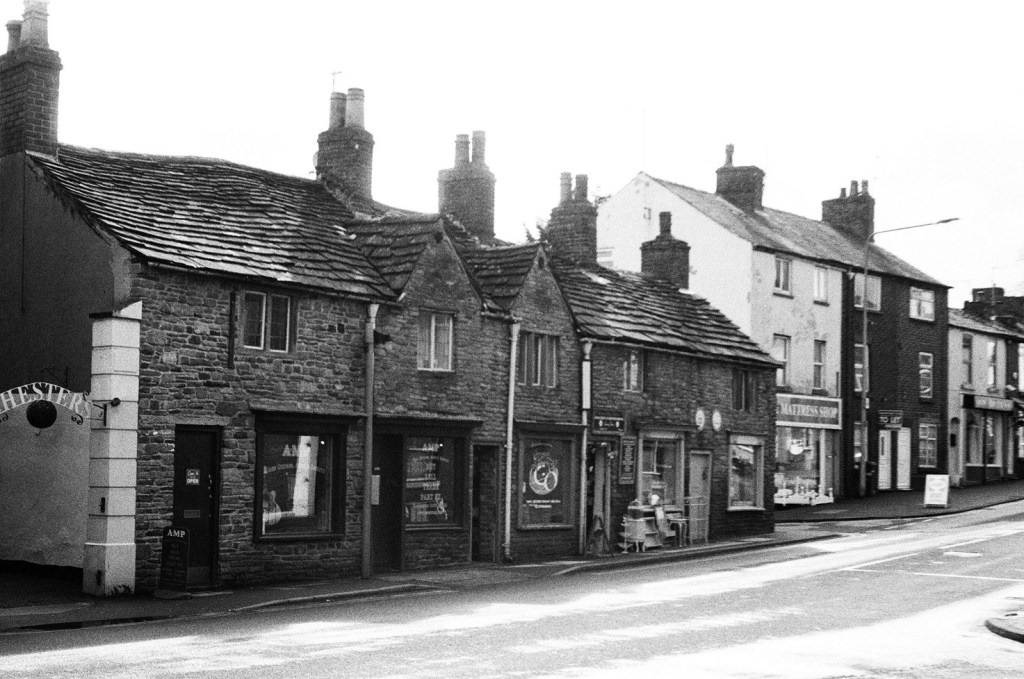
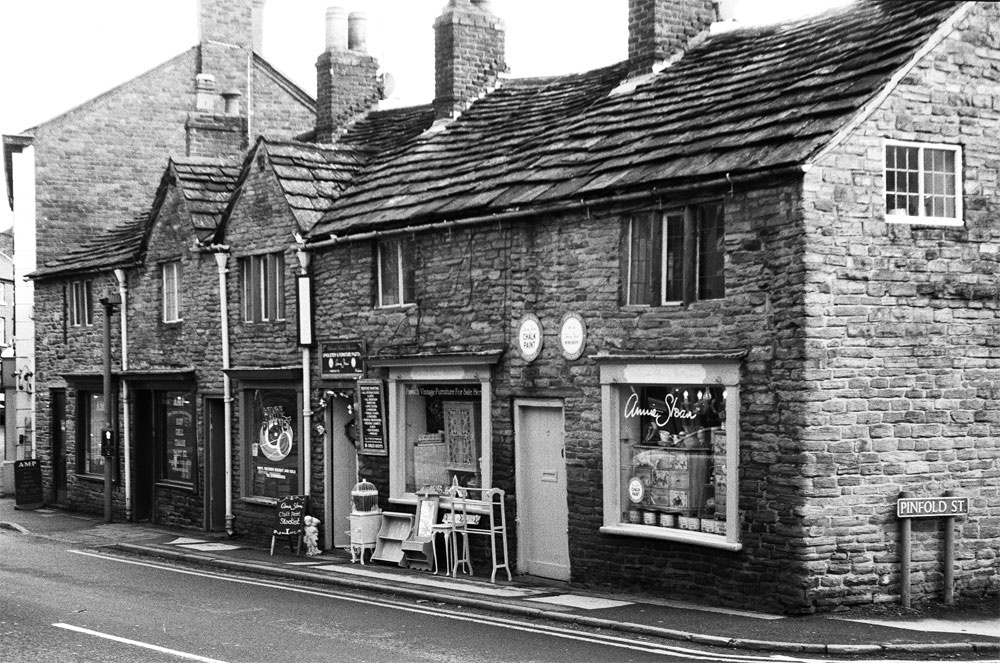
I live near Macclesfield, which if you talk to some people they will say that it is uninteresting. In some respects they may have a point but it has a history as being a centre for silk weaving and if you look around has some fairly old buildings in amongst the more recent additions. Some are almost traditional brick built weavers houses with large windows on the top floor to give the most amount of light, others are smaller stone built cottages with stone roofs.

I took my camera around looking for some of these on a partially cloudy day using the “sunny sixteen” method for exposure, rating the film at 100. When he film was finished I rewound it and packaged it off to blackandwhitefilmprocessing.co.uk in Plymouth for processing and scanning. The intention being that I wouldn’t set up a complete darkroom to print my own photographs but I would look at them on the computer screen, make any adjustments I felt necessary and then send the files of any particular favorites to an online photoprinter.

Here are three of the photographs I took on that day.

The first two are of some stone cottages which are now local shops, I like the way the roof goes up and down showing how the timbers below have sagged under the weight of the stone covering over the years. I have no idea how old they are though. The third photo shows a row of what I suspect are Victorian cottages – there are lots of these in Macclesfield, some brick, some rendered as here.

Overall I’m fairly pleased with the results from the Zorki’s first outing. I think they were all a bit overexposed as the highlight highlights in the sky are blown and the flare of the sun in the Jupiter lens (a known issue) is apparent in the first shot. I was a little surprised by the degree of contrast in the pictures and by the grain but I don’t know what developer was used as this may not have been optimal. I think I need to go out and take a few more shots and maybe find a better way to judge exposure as it seems the Delta 100 film is not too forgiving.

My 1967 Zorki 4

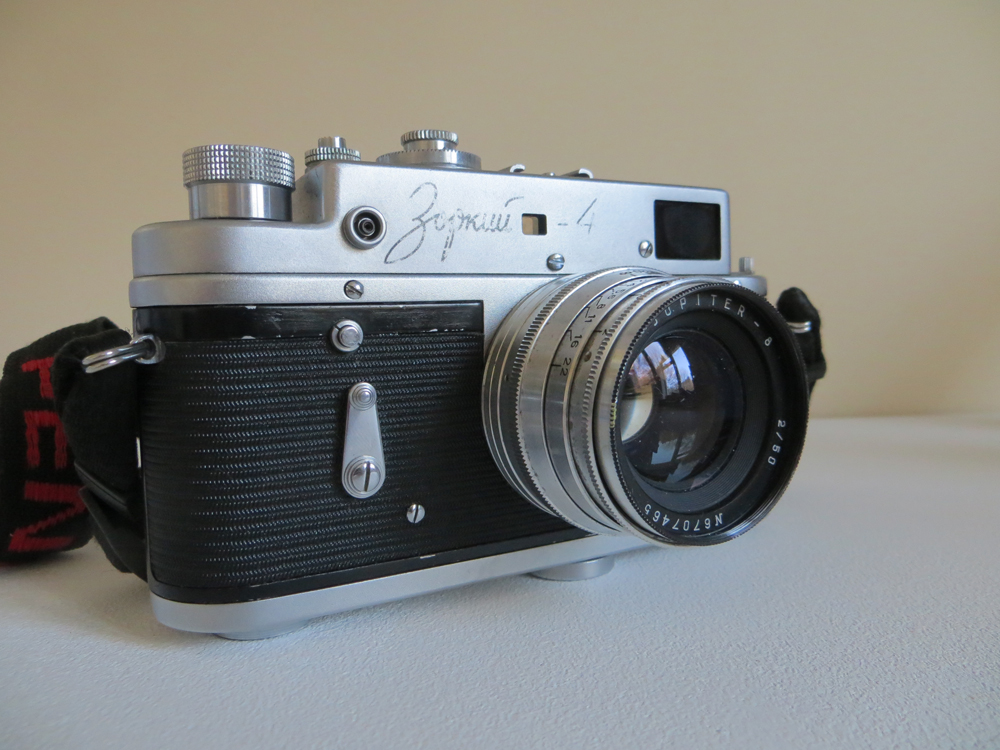
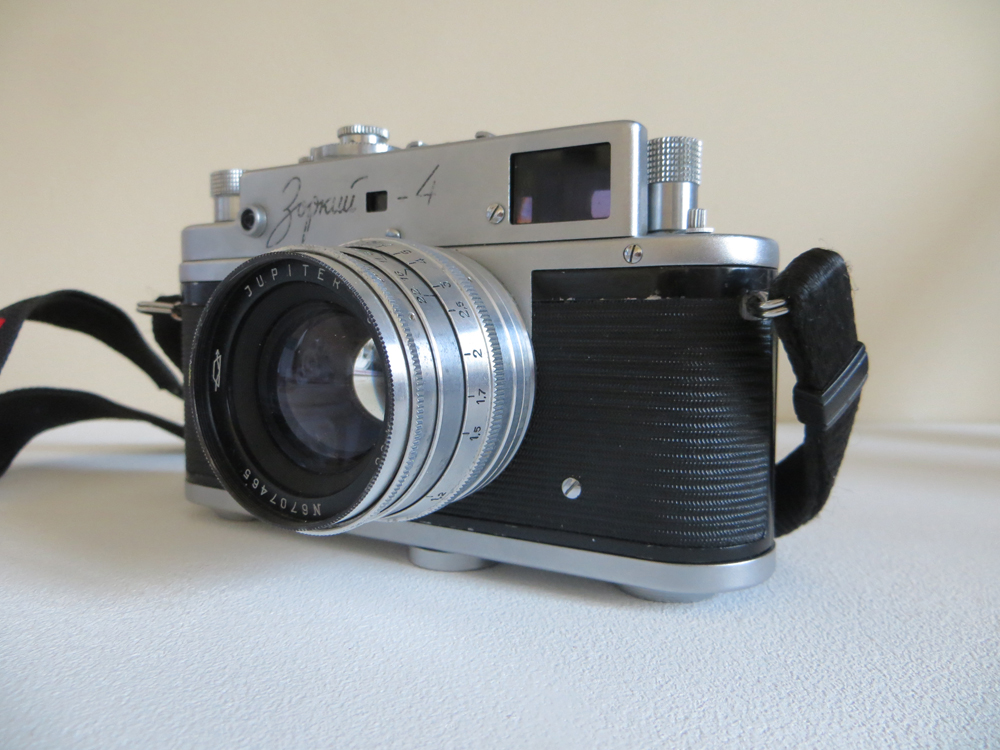
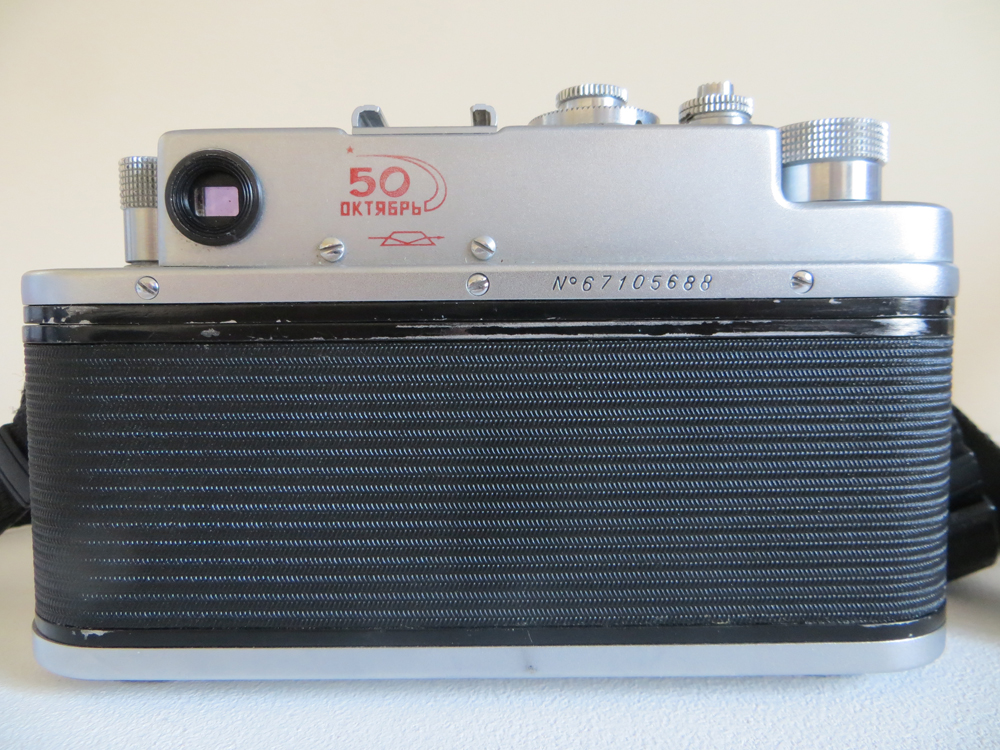
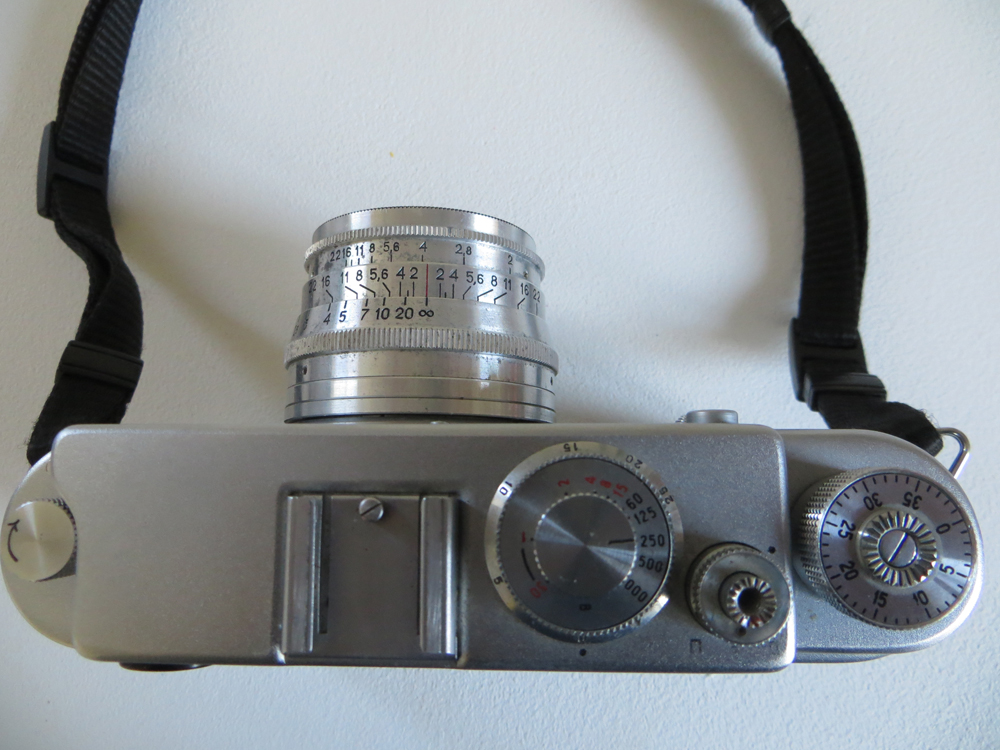
This is the camera I told you I had bought last time – the cost including postage was about £35 (I can’t actually remember). To me it looks to be in very good condition and the shutter sounds right on all speeds (whatever that might mean, but it is reassuring). There are a few scuff marks here and there and some paint rubbed off but remember it is over 50 years old after all. It was made in 1967 hence the fifty years of the Russian revolution reminder on the back.

The camera is also quite heavy for its size being made of metal throughout unlike many more modern cameras. It came with the Jupiter 50mm F2 lens which I had wanted which looks to be completely clear of fungus and only small traces of dust. Apart from the self timer, which I have not tried due to reading some horror stories on the net, everything works. The viewfinder isn’t the brightest but in good light the rangefinder circle is clear and works. After playing with it for a while to get familiar with it (remembering to wind on before setting the shutter speed, in fact remembering to wind it on) I decided it was time to give a try.

All I need now is to get some film so I can see just how well it performs.

My first “new” old camera

When I retired a decided that I wouldn’t rush around joining clubs and finding things to do – I wanted to just take it easy for a while, sort out the garden (which is large) and generally potter about for a bit. As it happens a lot of things got in the way of that but that’s another story and unrelated to this blog.

After a while I thought back to the pleasure old style film photography had given me and started to read up on the subject. I soon became aware that although digital photography was by far the major player, film photography had not died and indeed was enjoying a renaissance of sorts.

Looking back I realized that I had enjoyed black and white photography more than colour. Processing black and white film was simpler and I my mind the lack of colour added to some photographs far more than was lost. It gave some pictures more atmosphere and mood – it had none of the niggles of colour pictures such as colour casts or colour reflections or worse (the blight of many of my photos) someone in a fluorescent orange coat in the middle of an otherwise stunning landscape. Now I know that digital photo editing can solve all of these issues but that wasn’t what I wanted to do. I don’t think it’s wrong to fix photographs in this way, it’s just that I found it too much like hard work.

So I decided to buy myself an older film camera, but what?

After much reading on the internet about other people’s opinions I decided that I wanted something ‘old school’ and settled for a Zorki 4 rangefinder camera.  This decision was based on reading that the camera was still popular, ‘relatively reliable’ and fairly cheap. The slightly newer 4K model with a film advance lever rather than the knob was a bit more expensive and didn’t seem to offer much else in return.

After failing to ‘win’ at several eBay auctions I finally got one and duly waited for it to be delivered in the post. When it arrived I went over it thoroughly – it had been described as being in working order and so it was except I found the aperture ring on the lens to be so stiff that I could hardly move it. A shame because otherwise I thought it was a real gem. I had a dilemma, should I try to fix it with perhaps a little heat and a drop of oil or should I return it? In the end I contacted the seller who was very apologetic and suggested I return the camera for a refund – so I sent the camera back. A couple of days later the seller contacted me to say he had fixed it, with a little heat and a very small drop of oil, asking what did I want to do. I asked him to send it back to me which he did along with another note of apology and it looked and worked perfectly. I gave this seller some good feedback on this one – he earned it.

I’ll show you some photos of the Zorki in the next post.

Why would you want to buy an old film camera?

When I was ten or eleven, I was given a camera for my birthday, a Brownie 127. I loved that little camera. Sure it had a simple fixed focus lens and could only take photos in good light but at least I could point it where I wanted to.

In truth I wasn’t much of a photographer but after some time I progressed to a 35 mm Beirette which had more controls and allowed me to learn a little more about photography. This led me on to developing and then printing my own films and eventually converting my parent’s outdoor coal shed into a darkroom where I could use an enlarger. I also bought a secondhand Ross Ensign folding rangefinder camera which took larger 120 film – this camera was of much better quality than I had owned before. Again I was nowhere near an expert but the whole process of photography interested me.

Fast forward several years – school and university behind me, working, left home (and darkroom, contents sold), married – I bought a Canon AV-1 with a couple of extra lenses but used colour print film exclusively. I had this camera until digital started to compete and then it got packed away and was eventually sold on eBay along with the Ross Ensign. No guesses as to which one made the most money.

Fast forward a few more years and I’m retired and fancy rekindling my interest in film photography.

Design a site like this with WordPress.com
Get started